Walk into an Indian restaurant for the first time and most people instinctively look for the familiar. Butter chicken. Garlic naan. Chicken tikka masala. Maybe a biryani if they feel adventurous. But Indian cuisine is far more layered than the global “greatest hits” most diners know.
At The Madras Diaries, the menu reads like a culinary map of South India’s coastal kitchens, temple towns, spice routes, and street-food corners. Hidden between the popular dosas and curries are dishes many diners skip simply because they don’t recognize the names. That’s where some of the greatest treasures lie.
Some of these dishes come from Tamil Nadu’s bustling roadside eateries. Others carry influences from Kerala, Karnataka, Andhra Pradesh and the old trading ports of the Indian Ocean. Many are deeply regional. Some are nostalgic comfort foods. Others are bold, fiery, peppery, smoky, or beautifully tangy in ways that surprise first-time diners.
If you usually order the “safe” options, this blog is your invitation to explore beyond them. These are the hidden gems on the menu that deserve your attention the next time you visit The Madras Diaries.
The Magic of South Indian Cuisine
South Indian food is often misunderstood outside India. Many people reduce it to dosa and idli. While those staples are iconic, the cuisine itself is astonishingly diverse.
The food changes dramatically across regions. Tamil cuisine leans into tamarind, pepper, curry leaves, and comforting rice-based meals. Kerala cuisine introduces coconut, seafood, and fragrant spices. Andhra food is famous for heat and punchy flavours. Karnataka brings sweetness and earthy complexity. Coastal cooking layers seafood with black pepper and roasted spice blends.
Unlike many North Indian restaurant dishes that rely heavily on cream and butter, South Indian cooking often builds flavour through roasting, fermenting, tempering spices in hot oil, and balancing heat with acidity.
That complexity is what makes hidden menu gems so rewarding. These dishes don’t shout for attention. They quietly win people over after the first bite.
Podi Dosa: The Crispy Obsession You Didn’t Know You Needed
Most diners order a masala dosa and stop there. But the Podi Dosa deserves special attention.
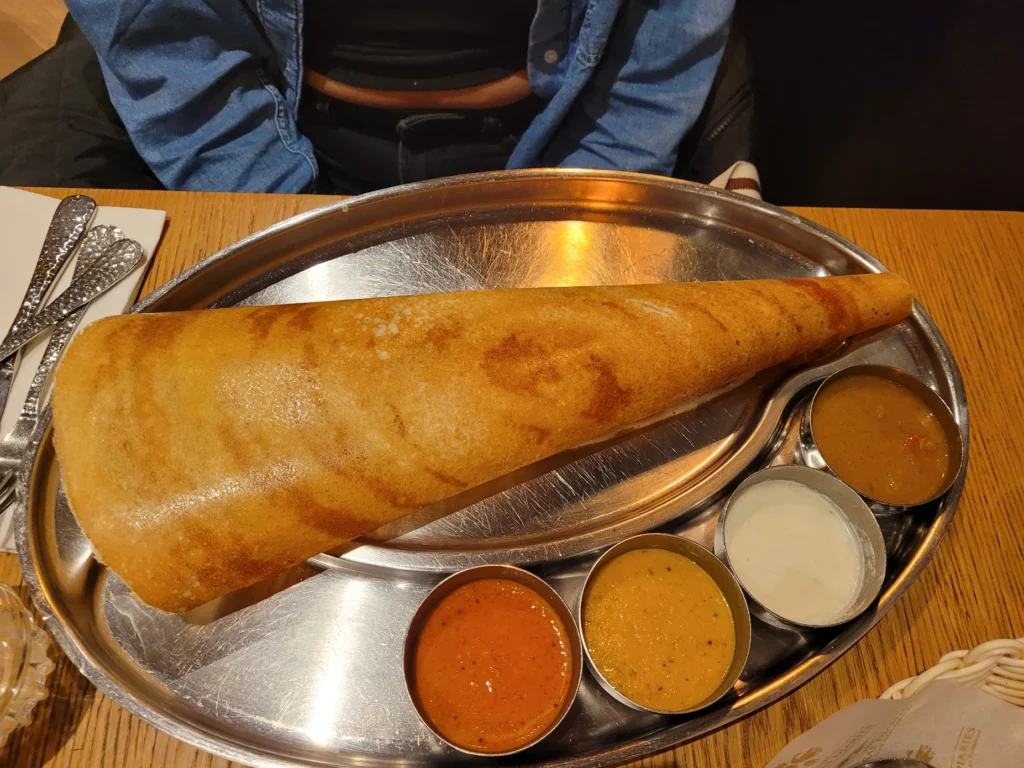
A dosa is already beautiful on its own. It’s a thin fermented crêpe made from rice and lentils, cooked until crisp and golden. The podi version elevates it. “Podi” refers to a roasted spice-and-lentil powder often nicknamed “gunpowder” because of its intense flavour. It combines roasted lentils, dried chillies, sesame, and spices into something nutty, smoky, spicy, and addictive.
It’s one of those dishes that reveals why South Indian cuisine is so respected. The flavour doesn’t rely on richness. It relies on texture, technique, and balance. If you love spicy food with crunch and depth, this is one of the smartest orders on the menu.
Thattu Idly: The Softest Comfort Food on the Menu
Thattu Idly is one of the most comforting dishes in South Indian cuisine. Instead of being steamed in small moulds, this version is cooked in a larger plate.
At first glance, it looks deceptively simple. But simplicity is the point. Fermentation gives the rice-and-lentil batter its airy texture and subtle tang. When paired with chutneys and hot sambar, the dish becomes deeply satisfying.
This is the kind of food South Indians grow up eating. It’s breakfast. It’s comfort food. It’s something served during family gatherings and quiet mornings alike.
For diners used to heavily sauced restaurant food, Thattu Idly can feel unexpectedly elegant. Soft, warm, fermented, and balanced, it proves that subtle dishes can be unforgettable.
Kothu Parotta: South India’s Ultimate Street Food Experience
If there’s one hidden gem that perfectly captures the energy of South Indian street food culture, it’s Kothu Parotta.
Imagine flaky Malabar parotta chopped rhythmically on a hot griddle with eggs, spices, curry base, herbs, and sometimes chicken. The sound alone is iconic in South India. Street vendors rapidly chop the bread with metal spatulas, creating a theatrical clanging rhythm that draws crowds from blocks away.
The dish is messy in the best possible way. The parotta absorbs spices while still retaining bits of crispness and chew. Every bite tastes slightly different. Some are smoky. Some are spicy. Some carry bursts of curry leaves or black pepper.
For people who love fried rice, stir-fries, or loaded comfort food, this dish is often an instant favourite!
Manathakkali Vathal: The Dish South Indians find Home in
Manathakkali Vathal Kuzhambu is deeply rooted in Tamil home cooking. It uses dried black nightshade berries simmered in a tamarind-based curry rich with chilli, spices, and slow-cooked depth. For many South Indians, this is nostalgic food associated with grandmothers, home kitchens, and traditional lunches eaten with hot rice.
The flavour profile is fascinating. Tamarind brings acidity. The dried berries add bitterness and earthiness. The spices create warmth without overwhelming the palate.
This is not a “starter Indian dish” for cautious eaters. It’s a dish for curious diners who want to experience regional Indian cooking beyond restaurant clichés. A dish like Manathakkali Vathal resists simplification. It proudly remains regional, traditional, and authentic.
Nandu Rasam: A Bowl of Pure Coastal Comfort
Rasam is one of South India’s great culinary achievements. The Nandu Rasam takes it further by elevating it with the wholesomeness of crabs. The spices combine with seafood sweetness to create something warming and layered. It’s the kind of dish that clears your senses immediately.
Across South India, rasam is often consumed when people feel under the weather because of its warming spices and digestibility. But it’s equally beloved as everyday comfort food.
Many first-time diners skip rasam because they assume soup is the least exciting section of the menu. In reality, it often contains some of the most sophisticated flavour balancing in Indian cuisine.
If you enjoy brothy ramen, seafood soups, or spicy consommés, Nandu Rasam deserves your attention.
Meen Polichathu: Coastal Goodness Wrapped and Packed with Flavour
Some dishes impress with fire and spice. Others impress with technique. Meen Polichathu belongs to the second category. This Kerala-style fish preparation coats fish in a spicy onion-and-tomato masala before wrapping it in banana leaf and steaming it gently.
The banana leaf keeps everything delicate yet intensely aromatic, while subtly infusing the fish with its flavour-elevating polyphenols. It’s one of those dishes where every component works quietly together.
Ghee Roast Dishes: The Fiery Coastal Icons
If you love bold flavours, do not ignore the ghee roast dishes.
Dishes like Paneer Ghee Roast and Kori Ghee Roast, are Mangalorean specialties known for roasted chillies, spices, and aromatic clarified butter. Ghee roast dishes are intense in character. Smoky red chillies create heat while ghee softens and rounds out the flavour. The spice blend clings to the paneer or chicken in thick, rich layers, creating a flavour that lingers long after the meal ends.
Beetroot Kola Urundai: The Vegetarian Surprise
This dish combines beetroot, lentils, nuts, and spices into deep-fried dumplings packed with texture and earthy sweetness. The contrast is what makes it memorable. Crisp exterior. Soft interior. Sweet beetroot balanced with savoury spice. It’s inventive without feeling modernized or fusion-driven. The dish remains rooted in South Indian cooking traditions while delivering something genuinely novel.
Watalappan: The Dessert You Probably Haven’t Heard Of
Most diners finish Indian meals with gulab jamun because it’s familiar. But Watalappan deserves far more attention.
This Sri Lankan dessert blends coconut milk, jaggery, cardamom, cloves, and nutmeg into a rich custard pudding with incredible depth. The dessert reflects the cultural overlap between South India and Sri Lanka, where spice routes and coastal trade influenced generations of cooking traditions. It’s silky, aromatic, and less overwhelmingly sweet than many classic Indian desserts.
How to Order Like a Curious Food Enthusiast
Order one thing you recognize and two things you don’t. That’s usually where the best discoveries happen. Instead of repeating globally popular Indian dishes available everywhere, you begin tasting regions, histories, and traditions. You realize Indian cuisine cannot be reduced to one style of cooking. And often, such dishes end up becoming the most memorable. That’s especially true at restaurants like The Madras Diaries, where the menu includes dishes that remain deeply connected to regional cooking traditions.
So the next time you open the menu at an Indian restaurant, skip past the predictable choices for a moment. The hidden gems are waiting.