Indian food has a reputation for being rich, creamy, and indulgent. Butter chicken, paneer curries, butter laden breads like naan, yogurt-based gravies and other dairy based dishes often dominate global perceptions of Indian cuisine. But that is only one side of the story. In reality, Indian food can be incredibly regional and deeply rooted in ingredients that are naturally dairy-free.
For people with lactose intolerance, dairy allergies, or those simply trying to eat lighter, Indian food can become one of the most satisfying cuisines to explore. At The Madras Diaries we recommend an entire world of dishes that do not rely on milk, cream, butter, or cheese for our diners.
The key lies in knowing what to order, what to avoid, and how to identify naturally lactose-free dishes. This blog breaks it all down in a simple, approachable way.
Identifying Dairy in Indian Cuisine
Before exploring dairy-free Indian food, it helps to understand where dairy commonly appears in Indian cooking.
The most frequently used dairy ingredients include:
- Milk
- Yogurt (curd/dahi)
- Cream
- Butter
- Ghee (clarified butter)
- Paneer (Indian cottage cheese)
North Indian cuisine tends to use dairy more generously, especially in restaurants. Creamy gravies, butter-rich breads, and yogurt marinades are common. South Indian cuisine, however, often relies more on coconut, tamarind, curry leaves, and lentils, making many dishes naturally dairy-free.
That said, dairy usage can vary from restaurant to restaurant. Some places finish dishes with butter or ghee even when the recipe does not traditionally require it. Asking questions always helps.
Why Indian Cuisine Works Well for Dairy-Free Eating
Indian cooking is built on layers of spices, aromatics, and cooking techniques rather than dairy alone. That means removing milk or butter rarely strips away flavor.
A dairy-free Indian meal can still feel rich and satisfying. Many traditional dishes already use:
- Coconut milk
- Sesame
- Cashews
- Lentils
- Ground peanuts
- Tamarind
- Tomatoes
These ingredients naturally create body and texture without needing cream or cheese.
Naturally Dairy-Free Indian Staples
One of the easiest ways to eat dairy-free at an Indian restaurant is to focus on dishes that are traditionally made without milk products.
Dosas
Dosas are thin fermented rice-and-lentil crepes from South India. They are naturally dairy-free unless cooked with butter or ghee.
Popular lactose-free options include:
- Plain dosa
- Masala dosa
- Onion dosa
- Mysore dosa
- Podi dosa (request oil instead of ghee)
Dosas are usually served with:
- Coconut chutney
- Tomato chutney
- Sambar
Most chutneys are dairy-free, though white coconut chutney occasionally contains yogurt in some restaurants. It is worth confirming.
Idli
Idlis are steamed rice cakes made from fermented rice and lentil batter. They are light, soft, and naturally dairy-free.
You can enjoy them with:
- Sambar
- Chutneys
- Spiced lentil powders
Because they are steamed, idlis also work well for people looking for lighter meals.
Sambar
Sambar is one of the safest dairy-free dishes in Indian cuisine. This South Indian lentil stew combines tamarind, vegetables, and spices into a flavorful accompaniment for rice, dosa, or idli. Most traditional versions contain no dairy.
Rasam
Rasam is a thin, peppery soup-like dish made of tamarind, black pepper, cumin, tomatoes, garlic, and herbs.
Popular versions include:
- Milagu rasam
- Tomato rasam
- Lemon rasam
- Garlic rasam
Rasam feels comforting, light, and deeply aromatic without any need for cream or butter.
Vegetable Stir-Fries and Poriyals
South Indian vegetable sides are often sautéed with coconut, curry leaves, mustard seeds and chillies.
Common options include:
- Beetroot poriyal
- Cabbage poriyal
- Beans poriyal
- Carrot thoran
These dishes are usually dairy-free and pair beautifully with rice.
Dairy-Free Indian Curries
Many Indian curries do not rely on cream at all. Here’s what you should try if you look for Indian curries without compromising on authenticity.
Coconut-Based Curries
Kerala cuisine is especially dairy-free friendly because coconut milk forms the base of many dishes.
Look for:
- Vegetable stew
- Kerala fish curry
- Prawn moilee
- Coconut chicken curry
These dishes feel creamy without using actual dairy.
Tamarind-Based Curries
Tamil and Chettinad cuisines often lean heavily into tamarind and spices without any dairy.
Popular options include:
- Meen kuzhambu
- Puli kuzhambu
- Kara kuzhambu
- Chettinad chicken curry
These curries are bold, spicy, and deeply layered.
Lentil-Based Curries
Lentils are central to Indian cooking. Many dal preparations are naturally lactose-free.
Some good choices:
- Dal tadka
- Kadala curry
- Manathakkali Vathal
- Arachavitta Sambar
Some restaurants finish dal with butter or cream, so requesting a dairy-free preparation helps.
Dairy-Free Indian Street Foods
Indian street food offers many dairy-free specialties. Popular options include:
- Pani puri
- Masala peanuts
- Sundal
- Bhel puri (without yogurt)
- Pakoras
- Bhajis
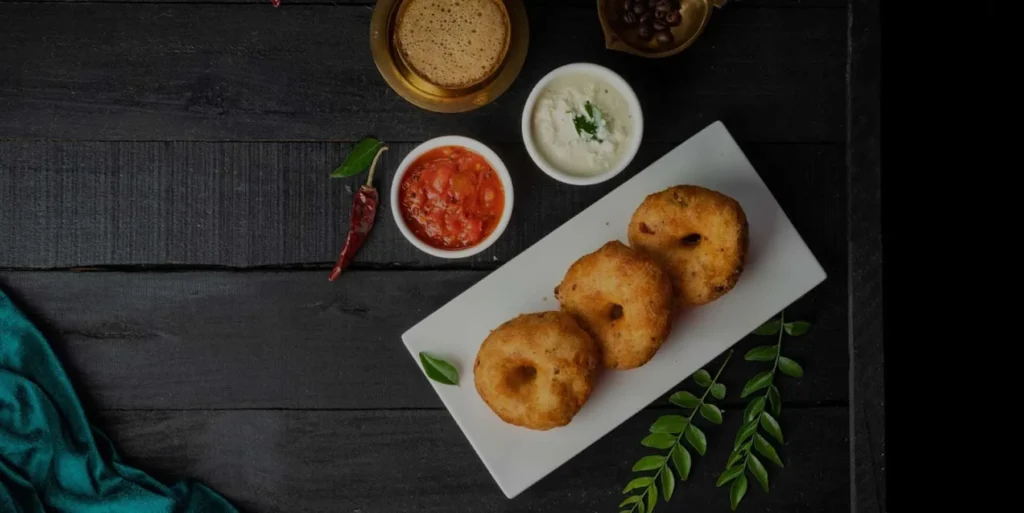
- Vada
- Samosas
Street food thrives on spice, crunch, herbs, and chutneys rather than dairy. Still, some chutneys may contain yogurt, especially mint chutney. Always ask before you order.
Dairy-free Rice Based Dishes
Rice-based dishes are often easier to adapt for dairy-free eating.
Popular options to try:
- Lemon rice
- Tamarind rice
- Coconut rice
- Tomato rice
- Vegetable biryani
- Jeera rice
The main concern is ghee. Many restaurants use it for aroma and richness. Requesting oil instead usually solves the problem.
Indian Breads: What to Eat and What to Avoid
Bread can become tricky because many Indian restaurants brush breads with butter. Some plain naan recipes also use yogurt or milk. Some safer options to order are Rotis, Chapatis and Phulkas.
Ingredients to Watch Out For Dairy-free Dining
Eating dairy-free becomes much easier once you recognize them on Indian menus.
Terms That Usually Mean Dairy
- Paneer
- Butter
- Malai
- Makhani
- Ghee
- Cream
- Korma (sometimes)
- Shahi
For example:
- Paneer butter masala
- Malai kofta
- Butter chicken
- Shahi paneer
These dishes almost always contain dairy.
Dishes from Regional Indian Cuisines That Are Great for Dairy-Free Eating
India is not one single cuisine. Each region brings different ingredients and cooking styles.
South Indian Cuisine
This is often the easiest option for dairy-free diners.
Best dairy-free dishes:
- Dosa
- Idli
- Rasam
- Sambar
- Coconut curries
Chettinad Cuisine
Chettinad food from Tamil Nadu is known for intense flavours and warmth :
Best dairy-free dishes:
- Enna Kathrikai
- Egg Roast
- Kola Urundai
- Kozhi Chettinad
- Chettinad Fish Curry
Kerala Cuisine
Kerala cuisine uses coconut milk extensively and hence has richness to offer without the dairy.
Best dairy-free dishes:
- Avial (confirm no yogurt)
- Vegetable stew
- Fish curry
- Puttu
- Appam
Gujarati Cuisine
Gujarati food includes many lentil and vegetable dishes, though yogurt appears frequently too.
Best dairy-free dishes:
- Thepla without yogurt
- Dry vegetable sabzis
- Khichdi
The Rise of Dairy-Free Dining
Restaurants around the world are becoming more aware of dietary preferences and intolerances. Indian restaurants increasingly offer vegan menus and dairy-free substitutions. This shift makes exploring Indian cuisine easier than ever.
At the same time, many diners are rediscovering traditional recipes that were naturally plant-forward all along.
Final Thoughts
Eating Indian food without dairy is far easier than many people expect. Beyond the butter-heavy restaurant classics lies a huge range of naturally lactose-free dishes filled with texture and culinary depth. You do not need dairy to enjoy rich curries, satisfying comfort food, or deeply aromatic meals. Indian cuisine has been offering delicious lactose-free options for generations.
South Indian cuisine especially offers endless possibilities. Crispy Dosas, comforting Sambars, peppery Rasams, coconut curries, lentil stews, and fragrant rice dishes prove that flavor does not depend on cream or cheese. The key lies in learning how to identify dairy ingredients, understanding regional cuisines from the menu, and communicating clearly when ordering. Once you do, Indian food becomes incredibly freeing for non-dairy preferences.