
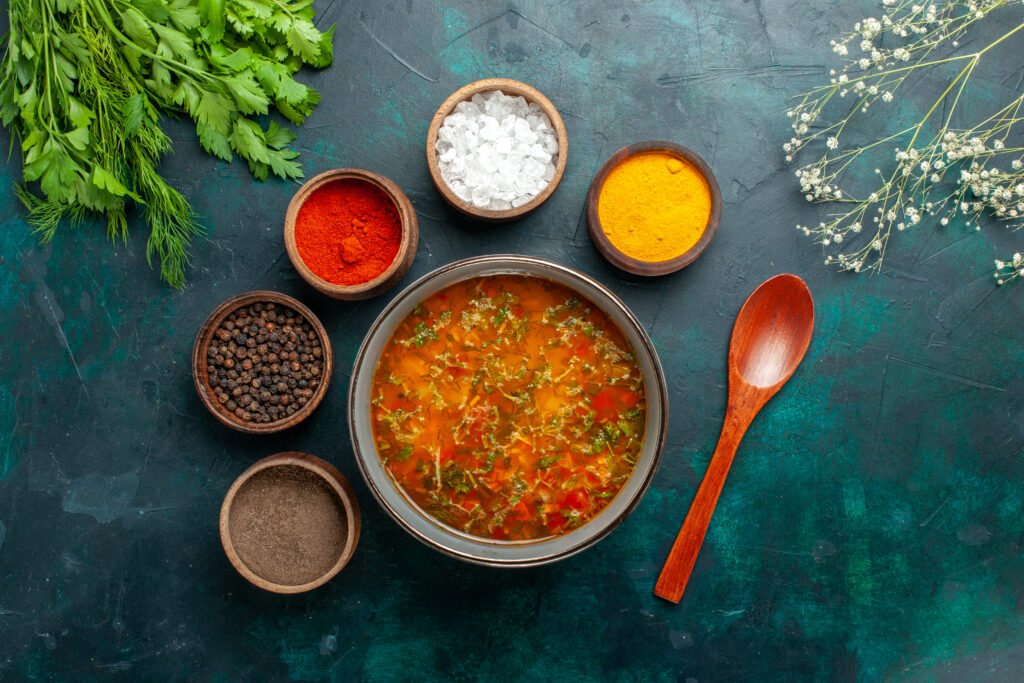
Indian food has a way of rethinking conventional categories. Indian soups can be light and peppery, rich and hearty, or somewhere between a broth and a curry. That is what makes them so interesting; they rarely fit into standard culinary definitions.
Nandu Rasam combines crab with spices for a warming, savoury broth. Chicken Pandhra Rassa, though, is a velvety, aromatic Maharashtrian speciality made from a spiced coconut milk broth cooked with chicken bones. Palak Soup keeps things simple, healthy and tasty with spinach.
Every bowl is unique here, and this blog post shows you just how varied Indian flavours can be. Let’s begin!
Indian Soups to Add to Your Must-Try List
Milagu Rasam
Few things on this planet clear out clogged nasal passages quite like a piping-hot bowl of classic Milagu Rasam. Born in the home kitchens of Tamil Nadu, this thin, fiery broth relies heavily on freshly cracked black pepper.
The tantalising rasam remains light and watery, unlike heavy Western soups that rely on butter or heavy cream. Sipped out of a mug on a rainy afternoon or poured over steam-hot rice with a side of crispy papad, it acts as the ultimate remedy for sluggish days.
Apart from being a beloved comfort food, generations have also relied on this recipe for its rich digestive properties and immunity-boosting warmth.
Mulligatawny Soup
The story of Mulligatawny is an interesting peek into colonial food history, showing how a South Indian staple was tuned to satisfy British tastes. The name itself stems from the Tamil word milagu-tannir, which literally translates to ‘pepper water,’ referring, of course, to our very own Milagu Rasam!
When British officers resided in Madras during the colonial era, they found the thin rasam too light. Local Indian cooks cleverly adapted the recipe by adding lentils, vegetables, apples, and occasionally chicken or mutton, thickened with coconut milk to suit European palates.
Today, this Anglo-Indian soup stands as a hearty, meal-in-a-bowl kind of dish that strikes a perfect balance between spicy, sweet, and savoury. If you like food with a story behind it, this is one to order simply because there is more to explore than what is sitting in the bowl.
Nandu Rasam
If you have never had Nandu Rasam, you are missing out on one of the tastiest soups to come out of coastal South Indian kitchens. Anyone whose encounters with rasam have been limited to its tomato or dal-based forms will find that this one shows Indian cooking does not stop at one formula.
Made using fresh crabs crushed slightly to release their sweet meat and juices directly into the cooking broth, this soup is famous for its intense seafood profile and medicinal reputation.
Cracking the crab shells and sucking out every bit of meat while sipping the broth is half the experience, honestly, and if you are eating it properly, your hands will get a little messy. It works beautifully with hot rice, yet it is equally enjoyable on its own as a soup.
Palak Soup
Palak Soup might get dismissed as the bland, health-conscious option, the thing you order when you are trying to eat clean. But when handled with a bit of spice and heat, it becomes one of the most delectable bowls of food you can eat.
This soup relies on fresh, blanched spinach puréed with garlic, ginger, and roasted cumin powder. A subtle pinch of garam masala added during the simmer lifts the earthiness of the greens, removing the metallic aftertaste that cooked spinach sometimes leaves behind.
It is packed to the brim with iron and vital vitamins, and offers a nutrient-rich option for anyone looking for a wholesome vegetarian soup that does not compromise on flavour.
Chicken Pandhra Rassa
Kolhapur, a district in Maharashtra, is famous for its brutally fiery red curries, and you might be surprised to find its most comforting creation is entirely white. It is traditionally served alongside bold meat dishes to cool the palate, but on its own, it functions as a soul-satisfying soup.
Pandhra Rassa, which translates directly to ‘white gravy’ or ‘white broth,’ is an absolutely rich chicken soup that gets its pale look and silky texture from fresh coconut milk, poppy seeds, and cashew paste.
It uses whole chicken bones simmered with aromatic spices, producing a fragrant liquid that feels truly light despite its luxurious appearance. But it manages to carry a deep spice flavour simply through ginger, green chillies, and white pepper.
Ulava Charu
Hailing from the states of Andhra Pradesh and Telangana, Ulava Charu is a rustic, healthy soup made from horsegram. Horsegram is the most nutrient-dense legume in the world, packed with complex carbohydrates and containing some of the highest amounts of iron and calcium found in any pulse.
The preparation process involves soaking and boiling the hard legumes for hours, then using the dark, nutrient-rich cooking liquid as the base for a thick, tangy broth. The soup carries a distinct, earthy depth of flavour that sets it apart from all other Indian lentil soups.
Its texture is thicker than standard rasam, almost velvety. Ulava Charu has long been considered a working person’s soup, filling and sustaining in ways that many broths simply aren’t.
Thengaipal Rasam
If traditional rasam feels a bit too sharp or acidic for your taste buds, Thengaipal Rasam offers a milder, soothing alternative. This variation takes the acidic base of traditional tamarind broth and tempers it with fresh, rich coconut milk.
The silky, pale-yellow soup hits every part of your palate at once with a slight tangy taste from tomatoes, subtle heat from green chillies and gentle smoothness, thanks to the coconut.
It pairs beautifully with plain steamed rice, though some households enjoy it on its own as a starter before a heavier meal. This soup feels indulgent and light at the same time, a balance that is harder to pull off than it sounds.
Paya Soup
Paya Soup is a rich, gelatinous mutton trotter broth that holds an iconic status in the Indian soup world. Slow-cooked overnight on low coal fires, goat or lamb trotters break down completely, releasing marrow, collagen, and essential minerals directly into the spiced water.
This flavourful broth coats your lips and warms your bones as no other soup can. The taste profile of Paya is complex, featuring spices alongside onions and ginger-garlic paste.
Because the trotters require a lot of time to soften, the liquid absorbs every ounce of spice, which results in a highly concentrated broth. There is a heartfelt satisfaction in a bowl of paya that fast food simply can’t replicate, a richness that comes only from hours.
Thakkali Rasam
“Thakkali” simply means tomato in Tamil, and this Rasam variation puts ripe, juicy tomatoes front and centre. Instead of relying mostly on tamarind for sourness, this broth extracts its bright, tangy soul directly from cooked tomatoes mashed by hand.
The vibrant, ruby-red liquid stands out from a basic tomato soup with the sheer depth of fresh aromatics cooked into the base. Drinking a bowl of Thakkali Rasam feels like an instant reset for your palate and your mood.
It is incredibly gentle on your digestive system, making it the food you crave when you are feeling under the weather, recovering from a long journey, or simply want something honest and homemade.
Drumstick Soup
In South India, the drumstick plant, the long, ridged seed pod from the Moringa tree, is celebrated as a powerhouse of nutrition. While moringa powder has recently taken health stores by storm, traditional households in the country have been making savoury soups out of fresh drumstick pods for generations.
Drumstick soup is made by boiling sliced pods until soft, scraping out the fleshy, seed-filled pulp, and cooking it with a simple mixture of tomatoes, shallots, garlic, and freshly ground black pepper.
The soup is strained to eliminate fibrous outer skin, leaving behind a smooth broth that feels light and clean to drink. Yes, it looks fairly plain in a bowl, but trust us, the flavour payoff more than makes up for its lack of visual drama. To be honest, that is part of the charm of Indian cuisine. It makes a traditional soup so enjoyable with just simple ingredients.
Conclusion
That brings us to the end of our little journey through India’s delectable soups! We hope this list has given you a few new ones to look out for and, more importantly, made you curious enough to taste them for yourself and find just how much flavour can fit into a soup. Find your favourite Indian soup at The Madras Diaries located in Amsterdam and Utrecht.
Until next time, here’s to warm bowls, lip-smacking flavours, and plenty of delicious discoveries!

