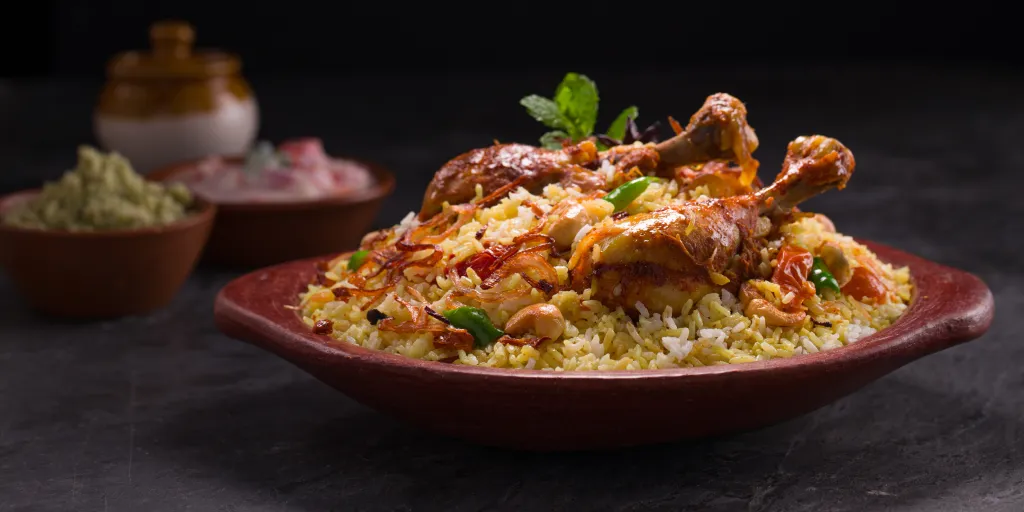
Everyone’s mind jumps straight to biryani when Indian rice is brought up, and rightly so; it is famous for a reason. However, you have only sampled one delicious course of a massive banquet. The country’s connection to rice goes much, much deeper.
Bisi Bele Bath from Karnataka, a wholesome mix of rice, lentils and vegetables, is happiness in a bowl. Coconut Rice, with its mild sweetness and aroma, pairs beautifully with spicy curries or fried sides. Mutton Tehri from North India brings rich, slow-cooked goodness for all the meat lovers.
So, keep scrolling for the ultimate list of deliciously spiced rice alternatives.
India’s Delectable Rice Creations
The Vegetarian Dishes
- Curd Rice
Curd Rice or Thayir Sadam is therapy on a plate. It is what South Indians turn to when the sun is too hot, the day has been too long or when all they want is something that feels gentle on the stomach and soul.
Cool, creamy yoghurt mixed into soft, slightly mashed rice, topped with tempered mustard seeds, curry leaves and a dash of salt, this dish feels divine. There is no grand presentation, no overpowering spice.
It is humble, grounding and refreshing. Some add pomegranate seeds or grated cucumber for a light crunch, others prefer it plain, served with a pickle on the side. This is the great healer, the ultimate comfort food for a troubled tummy.
- Tamarind Rice
The smell of tamarind rice wafting through a kitchen can make anyone pause mid-conversation. Known as Puliyodarai or Puliyogare, this dish is the definition of balance. Sour, spicy, nutty and slightly sweet, all at once.
The key to this dish is the concentrated, slow-cooked mixture of tamarind pulp, jaggery, red chillies, fenugreek seeds, asafoetida and various lentils and nuts.
This paste is usually made in large batches and stored, ready to be tossed with hot rice in minutes, making it a staple for travel, picnics and long train journeys, as it keeps well without refrigeration.
It is complex, intense and one of those dishes that somehow tastes even better the day after it is cooked. This scrumptious rice dish is also served during temple feasts as prasadam (religious offering).
- Lemon Rice
Lemon Rice, a South Indian zesty meal, known locally as Chitranna or Nimmakaya Pulihora, is something you do not want to miss. The interplay of sharp, refreshing lemon juice, mixed with the South Indian tempering tempts your palate.
It is a fantastic example of a quick-fix meal that feels utterly gourmet. The meal is generally packed into lunchboxes or served alongside a spiced potato stir-fry.
It is light and easily digestible in the stomach, yet completely satisfying. This lip-smacking dish proves once and for all that sometimes, the simplest, most accessible ingredients can create a deeply enjoyable dish that is anything but plain.
- Bisi Bele Bath
Venturing to Karnataka, you encounter Bisi Bele Bath, a dish whose name literally translates to ‘hot lentil rice’, which, frankly, undersells its deep complexity by an enormous mile.
It is the most comforting, nutritious and flavour-packed meal you could ever receive and you are halfway to understanding this delicious dish. It brings together rice, lentils (toor dal) and local, seasonal vegetables like carrots, beans and peas.
But, it is the spice powder used that absolutely makes the dish. Served piping hot, often finished with a final, luxurious drizzle of ghee and accompanied by crisp potato wafers or crunchy boondi, Bisi Bele Bath is a must-try feast.
- Coconut Rice
Coconut Rice or Thengai Sadam is another precious gem found across the southern states. It is recognisable by its pure, delicate flavour and its gorgeous, snowy-white appearance.
Here, the fresh, finely grated coconut is lightly sauteed alongside the essential tadka ingredients such as mustard seeds, curry leaves, lentils for texture and sometimes a tiny hint of ginger and green chilli to provide a soft, warming background note.
This aromatic mixture is then carefully folded into a bed of perfectly cooked, fluffy, hot rice. It is the star during festivals and special occasions and acts as the ideal, delectable accompaniment to a spicy Potato Roast or a tasty Vegetable Korma.
- Tomato Rice
When the hustle of the day gives way to the need for simple, immediate comfort, Tomato Rice (Thakkali Sadam) is what you should reach for. It is the hearty, familiar meal that graces countless tables.
The foundation is a rich, flavorful puree of tomatoes, cooked down patiently with onions, ginger and garlic, which is then seasoned with a spice mix. The rice is simmered directly in this rich, slightly saucy tomato base, essentially creating a quick, satisfying one-pot pilaf.
It feels like a complete meal unto itself, prepared for ease and true satisfaction, requiring nothing more than a simple side of Raita (yoghurt dip) or a crunchy Papad.
- Ghee Rice
The name Neychoru (Ghee Rice) itself suggests luxury, though the preparation remains wonderfully simple. This dish is a staple of Malabar cuisine in Kerala, reserved for festive gatherings and wedding feasts because of its rich aroma, taste and texture.
While deceptively simple in its ingredient list, it requires an exquisite touch. This dish is all about showcasing the sheer, intoxicating fragrance of clarified butter (ghee).
The magic happens when the rice is lightly toasted in generous amounts of ghee with whole spices like cardamom, cloves, cinnamon and bay leaves. Golden-fried onions, cashews and raisins may also be folded in, adding a sweet-and-crunchy counterpoint.
The Non-Vegetarian Rice Meals
- Erachi Choru
Erachi Choru, literally ‘meat rice’, is the pride of Kerala’s Malabar region. The meat here is first cooked down in a rich gravy of roasted spices, ginger, garlic and sometimes coconut milk. This creates a deep, dark, intensely flavoured reduction.
Smaller-grained, fragrant rice varieties like Kaima or Jeerakasala are then cooked directly in this concentrated meat stock, allowing the grains to soak up every little of the savoury essence.
The mouthwatering dish showcases the distinct cultural influences of the area and offers a unique texture and flavour profile quite distinct from the familiar rice-based preparations found elsewhere in the subcontinent.
- Mutton Tehri
While Mutton Tehri might not have the global fame of biryani from the Awadh region (Lucknow), it is the beloved, comforting local alternative. It represents a different side of the Nawabi kitchen, the one that warms the soul without all the royal pomp.
Tehri is fundamentally a pulao where the rice is cooked alongside the meat and vegetables, but it distinguishes itself by being easier, quicker and less intensely spiced than a biryani.
The meat is seared and then cooked down with aromatic spices, potatoes and peas, before the rice is added. The interesting characteristic of Tehri is its emphasis on the fragrant whole spices, which lend a clean, pure aroma to the dish.
- Yakhni Pulao
Yakhni Pulao is a flavoursome Kashmiri creation that stands apart for its subtlety and elegance. The heart of this dish is the Yakhni or stock, which is made by slow-cooking the meat (traditionally lamb or mutton, often with the bone) in water with a spice mix.
This clear, fragrant stock is then strained and used as the cooking liquid for the Basmati rice. The rice grains, therefore, absorb the concentrated, delicate flavour of the broth rather than being coated in a heavy masala.
The result is a dish that is pale in colour, aromatic and light on the palate, yet intensely flavourful. The meat in the final dish is exceptionally tender, having been cooked twice. Yakhni Pulao is a pure expression of the Kashmiri aesthetic where flavour is achieved through layering.
Ah, what a trip! We have taken the flavourful route through India’s rice history, showcasing reasons why you should look beyond biryani. So, enjoy, experiment and let us know which of these culinary treasures becomes your new favourite Indian food. Happy eating!